In what might be the ultimate triumph of musical satire over law enforcement overreach, Grammy-nominated rapper Joseph "Afroman" Foreman has officially secured a massive Afroman lawsuit victory. On Wednesday evening, a jury handed down a verdict protecting the artist's right to mercilessly mock the police officers who raided his home. For fans of the First Amendment—and anyone who appreciates funny Ohio local news—the conclusion of this bizarre legal saga proves that the pen, or in this case, the home security camera, is mightier than the sword.
The Verdict: An Unprecedented Afroman Legal Win
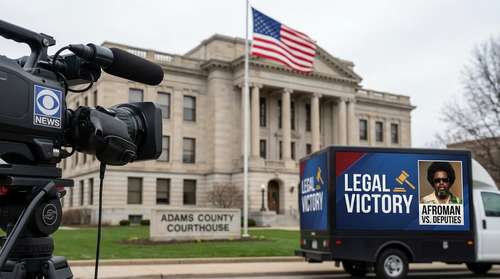
The highly publicized Afroman vs deputies 2026 civil trial reached its climax on March 18, when an Adams County, Ohio jury ruled entirely in favor of the 51-year-old musician. Seven sheriff's deputies had filed a sweeping defamation and invasion of privacy lawsuit against Afroman, demanding nearly $4 million in damages. Their grievance? The rapper had weaponized his own home surveillance footage to create wildly popular comedic tracks that ridiculed their botched 2022 raid on his property.
Following the verdict, Afroman—who famously testified wearing a custom red, white, and blue American flag suit and matching sunglasses—stepped outside the courthouse in a white fur coat to address his supporters. "We did it, America! Yeah, we did it! Freedom of speech! Right on! Right on!" he shouted, later posting the celebratory clip to his social media channels. He added a poignant reflection on the ordeal, telling local news outlets: "I didn't win, America won."
The Infamous Adams County Sheriff Raid
To understand the roots of this extraordinary legal battle, you have to look back at the original Adams County Sheriff raid. In August 2022, heavily armed deputies executed a search warrant on Foreman's Winchester, Ohio residence. Wielding rifles and tactical gear, officers busted through his front door looking for evidence of drug trafficking and kidnapping.
They found absolutely nothing. No kidnapping victims were hidden in his suit pockets, and no illicit narcotics operation was uncovered. No charges were ever filed against the artist. However, Afroman claimed the deputies caused roughly $20,000 in property damage and temporarily seized cash—of which he alleged $400 mysteriously went missing upon its return. An outside investigation later attributed the missing money to a simple "miscount" by the authorities.
Birthing the 'Lemon Pound Cake' Viral Video
Rather than simply complaining about the unjustified intrusion, the "Because I Got High" singer got exceptionally creative. He pulled the pristine footage from his home security cameras and produced a legendary police trolling music video series to recoup his financial losses.
The crown jewel of this revenge campaign was the Lemon Pound Cake viral video. The song directly highlights a surreal moment during the tense raid where an armed officer completely drops his tactical focus to hungrily stare at a lemon pound cake sitting on the rapper's kitchen counter. Racking up over 3.5 million views on YouTube alone, the track turned the deputies into internet punchlines overnight. He followed up with other satirical hits like "Will You Help Me Repair My Door?" and openly referred to the officers as "crooked cops."
Inside the Afroman vs Deputies 2026 Trial
Embarrassed by their newfound internet infamy, the seven deputies sued the artist in March 2023. During the three-day trial this week, the plaintiffs detailed the severe emotional toll the videos took on their personal and professional lives. They claimed the rapper's actions were "willful, wanton, malicious" and led to intense public harassment.
Deputy Lisa Phillips testified through tears that one of the videos contained derogatory jokes that questioned her gender and sexuality. Meanwhile, Sgt. Randy Walters told the court that the viral sensation had caused his child to be hazed at school. The plaintiffs' attorney, Robert Klingler, argued that an unfair search warrant execution "doesn't justify telling intentional lies designed to hurt people."
The Free Speech Defense
Despite the emotional testimonies, Afroman's defense team held firm on First Amendment grounds. Defense attorney David Osborne Jr. argued that the music videos were clearly exaggerated parodies and social commentary, not statements of literal fact. "No reasonable person would expect a police officer not to be criticized. They've been called names before," Osborne stated during his closing arguments.
Afroman himself took the stand to deliver the most devastating defense of all: the officers brought the mockery upon themselves. "The whole raid was a mistake. All of this is their fault," Foreman testified. "If they hadn't have wrongly raided my house, there would be no lawsuit. I would not know their names, they wouldn't be on my home surveillance system, and there would be no songs."
A Sweet Victory for Creative Satire
The jury ultimately agreed that law enforcement officers acting in their public capacity are not shielded from harsh public criticism or artistic parody. This Afroman lawsuit victory sets a fascinating precedent for how citizens can use digital platforms and their own security footage to hold authorities accountable through comedy.
While the Adams County deputies might have walked away empty-handed, the internet gained a timeless reminder of free speech in action. As for Afroman, he successfully turned a terrifying home invasion into a lucrative, culturally defining moment—and proved that sometimes, revenge is a dish best served as a slice of lemon pound cake.