If you have been keeping up with the wild funny crime stories 2026 has delivered so far, you have likely encountered the bizarre tale of a local clergyman's retail sins. Over the past 48 hours, the internet has been ablaze with rumors regarding a Pittsburgh priest arrest stemming from a $1,000 Walmart baseball card heist. According to viral social media threads, a clergyman identified as Father John David Schuler supposedly orchestrated a high-tech baseball card swap scam at a self-checkout kiosk. Netizens quickly dubbed this supposed mastermind the immaculate deception priest. However, as is often the case with the weird news Pennsylvania is known for, the verified facts tell a slightly different—but equally astonishing—story.
The Viral Legend vs. The Real Pittsburgh Priest Arrest
While the internet loves a good myth, diligent journalism requires separating verifiable facts from online fiction. The trending narrative claims that Father John David Schuler utilized a sophisticated barcode-swapping technique to score premium trading card boxes for mere pennies. While a self-checkout swap-scanning operation makes for an incredibly cinematic headline, official court documents and police records confirm a different reality. The actual clergyman involved in the recent controversy is the Very Rev. Aidan Smith, 42, who served as the head priest and dean of Trinity Episcopal Cathedral in downtown Pittsburgh.
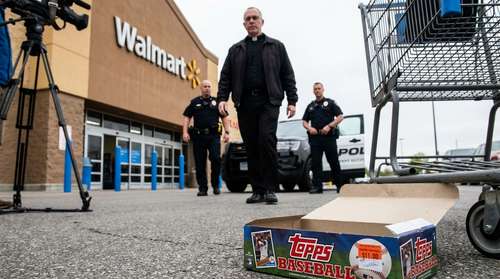
Smith was officially taken into custody by police on February 27, 2026, at a Walmart located in Economy Borough, a suburban community situated just outside of Pittsburgh. So, how did the actual theft occur if it was not the highly publicized baseball card swap scam? Local authorities and store security personnel reported a much less sophisticated method. The dean was allegedly caught exiting the store into the parking lot with 27 packs of baseball cards physically hidden under his clothing and tucked inside a cardboard box he was carrying. Following an overnight detention, Smith was released after posting a $50,000 bail.
Inside the $1,000 Walmart Baseball Card Heist
The verified details of this retail theft are staggering enough without any internet embellishments. According to the official police report released in early March 2026, the apprehension was not just an isolated moment of poor judgment. Instead, surveillance footage allegedly captured the cathedral leader engaging in a brazen, multi-day shoplifting spree.
Investigators state that store security cameras first observed the priest on February 23, shoplifting approximately $244 worth of cards. The following day, February 24, video evidence allegedly showed him taking another $261 in merchandise. The pattern continued on February 25 with an additional $121 in stolen cards, culminating in his final apprehension by local police on February 26 with packs valued at $245. Over these four consecutive days, police report that he consistently walked past the cash registers without attempting to pay. In total, authorities estimate the value of the stolen trading cards at approximately $1,100. Minus the inventory recovered during his arrest, Walmart is officially seeking $873 in financial restitution.
Where Did the 'Immaculate Deception Priest' Rumor Originate?
You might be wondering why social media generated the fabricated alias of Father John David Schuler and the complex swap-scanning narrative. In the fast-paced, algorithm-driven world of digital news, users frequently conflate separate incidents. The modern sports card market has seen an explosion in value, making high-end retail products prime targets for organized theft. Barcode swapping—where thieves place the UPC of a cheap item over a premium product at self-checkout—has become a prevalent issue for major retailers.
Online sleuths likely combined known retail vulnerabilities with the initial reports of the arrested clergyman. Once a catchy, pun-filled moniker like the immaculate deception priest begins trending, the fictionalized version of events easily eclipses the straightforward reality. The viral spread highlights how quickly actual events can transform into urban legends, especially when they perfectly fit the mold of the weird news Pennsylvania regularly exports to the rest of the country.
Repercussions for the Cathedral and the Clergy
Following the widespread emergence of this Walmart baseball card heist, the local religious community has been left grappling with shock and confusion. The Right Rev. Ketlen Solak, bishop of the Episcopal Diocese of Pittsburgh, quickly moved to issue a formal, compassionate statement to the cathedral's congregation. In a March 5 letter, she confirmed the reverend's formal suspension and pledged a full investigation into the clergy misconduct.
"I have spoken with Aidan and assured him of our prayers for him in this difficult time," Bishop Solak wrote in her message to members. She urged the community to pray for the priest's family and the grieving congregation.
Interestingly, church records indicate a preexisting layer of complexity: the reverend had already been placed on administrative leave since late January 2026, weeks before the shoplifting spree even commenced. While the diocese has not publicly disclosed the underlying reason for that initial disciplinary leave, the subsequent criminal charges of receiving stolen property and retail theft have placed his ecclesiastical career in severe jeopardy. Currently, his defense attorney has declined to provide a public comment on the pending charges.
The Aftermath of Pennsylvania's Strangest Retail Crime
As local authorities proceed with the formal legal process, the viral fascination surrounding the case shows absolutely no signs of slowing down. Whether you are tracking the genuine court proceedings of Aidan Smith or laughing at the wildly embellished social media tales of Father John David Schuler, this incident has permanently cemented itself in the digital hall of fame for the best funny crime stories 2026 has witnessed.
The bizarre convergence of organized religion, big-box retail security, and the booming sports card hobby makes for an incredibly unusual mix. While it may not have been the high-tech barcode scam the internet desperately wanted it to be, this saga serves as a stark reminder that reality is often just as captivating—and surprising—as viral fiction. For now, local Pittsburgh card collectors are simply hoping the remaining supply of retail trading cards stays safe on the shelves, waiting for those who actually intend to pay for them.