
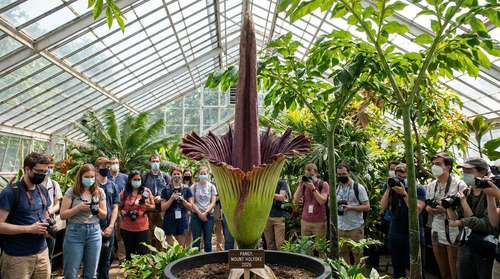
Imagine willingly skipping work, driving two hours, and standing in a massive line just to inhale the pungent aroma of a baking, sun-drenched diaper mixed with the scent of an opened grave. Welcome to the corpse flower bloom 2026, the botanical event of the season that has transformed a tranquil New England campus into the epicenter of weird nature news. The towering specimen, affectionately dubbed "Pangy," fully opened its majestic, dark purple petals overnight on Monday, April 13, 2026, greeting visitors the following Tuesday. Now, the imposing Amorphophallus titanum is officially perfuming the air in South Hadley, Massachusetts, and thousands are clamoring for a whiff.
The Staggering Reality of the Titan Arum Smell
If you walk through the glass doors of the Mount Holyoke Talcott Greenhouse this week, your olfactory senses will immediately signal that something has died. The Titan Arum smell is legendary, but experiencing it in person defies simple explanation. Visitors have likened the stench to a smorgasbord of horrific odors: rotting eggs, forgotten gym socks, a trash can left in the summer heat, and a decaying bird.
Nyx DelPrado, a first-year student at the college, arrived expecting a mildly unpleasant garden scent. Instead, the reality wrinkled their nose instantly, describing the aroma as genuinely mirroring a biology lab dissection. The name rotting flesh flower is entirely accurate, serving as a brutal reminder that Mother Nature has an endlessly fascinating, and sometimes stomach-turning, playbook.
The Botanical Mechanics of Strange Plants
To understand why anyone would visit this malodorous giant, you have to look past the smell and appreciate the evolutionary genius at work. The corpse flower is native to the dense, humid rainforests of Sumatra, Indonesia. In that competitive environment, it needs a highly specialized method to guarantee reproduction.
Unlike your standard garden-variety roses that rely on bees, these strange plants target a much more morbid demographic: carrion beetles and flesh flies. To lure them in, the plant does not just mimic the odor of a rotting carcass; it actively generates heat.
The towering central column, called the spadix, warms up to human body temperature to help volatilize the foul-smelling compounds, casting them far and wide across the jungle canopy—or in this case, the campus greenhouse. Surrounding this heated spike is the spathe, a deep, velvety purple structure that visually resembles exposed meat. When bugs arrive looking for a place to lay their eggs, they become covered in pollen, inadvertently assisting the plant's survival before buzzing off in search of actual carrion.
Pangy Mount Holyoke: A Record-Breaking Spectacle
The current celebrity of the botanical world, Pangy Mount Holyoke, is not a first-time performer. The plant previously unfurled its massive bloom in 2023. Corpse flowers are notoriously unpredictable, sometimes taking years of dormancy to store enough energy in their underground structures before pushing up a single, gigantic blossom.
For six weeks leading up to the grand opening, Pangy operated like a biological rocket. Tom Clark, the greenhouse director and botanic garden curator, monitored the plant as it shot upward by several inches a day. By the time Tuesday morning rolled around, the sheer intensity of the odor was wall-to-wall. Staff entering the building were hit with an overwhelming, almost unbearable wave of tanginess that saturated the air.
For the dedicated staff, taking care of Pangy is about more than just managing the stench. The greenhouse functions as a living plant museum, housing approximately 2,000 species. Displaying a rare titan arum offers the public an unforgettable, visceral lesson in biodiversity and the extreme adaptations species develop to survive.
The FOMO Behind a Fleeting Wonder
Why do people flock to something that smells like a dumpster? The answer lies in the intense, ticking clock of the bloom cycle. Once the flower fully opens, the timer starts. The towering structure typically collapses and withers within just a few days.
This strict timeline triggers a unique brand of botanical fear of missing out. Michael Breton, a dedicated nature enthusiast, took a vacation day and drove two hours the moment he received the alert that the flower had opened. As he quickly realized, reading an article about a blooming corpse plant from two days ago means you have already missed your chance. You have to drop everything and run.
Similarly, junior Namuuna Negi noted that the fleeting nature of the experience makes it an instant cultural touchstone. There is a specific thrill in knowing something extraordinary is about to vanish. People want to witness the oddity firsthand, securing bragging rights so they can talk about the bizarre afternoon they spent inhaling the scent of decaying meat.
While Pangy will soon wither and retreat back into dormancy, the plant survives underground. It will quietly gather strength, waiting for the day it can once again unleash its magnificent, putrid glory on a fresh batch of curious visitors.