Elon Musk has officially declared a digital "meme war" on his social media rivals, sparking a viral trend that has taken over X (formerly Twitter) this week. On Sunday, March 1, 2026, the tech billionaire reposted a biting meme that brutally compared the information velocity of X against Meta's Instagram and Facebook. The post, which suggested that X users receive real-time "war updates" while Instagram users are blissfully unaware until the next day, has triggered a massive flood of user-generated content mocking the latency of Mark Zuckerberg's platforms. As of Monday morning, the hashtag #XvsMeta is trending globally, with users debating whether speed or curation matters more in the modern social media landscape.
The Tweet That Started the 'Speed War'
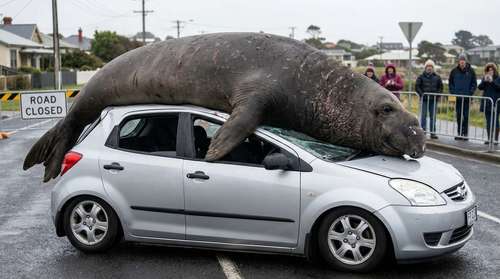
The controversy began when Elon Musk amplified a user's meme that perfectly encapsulated the current sentiment regarding breaking news. The image featured a three-panel comparison: an X user watching live updates of a conflict, an Instagram user posting brunch photos with the caption "War? What war?", and a Facebook user finding out about the event two days later. Musk quoted the post with his own savage addendum: "And two days from now on FB."
This interaction wasn't random. It came on the heels of a massive traffic spike on X, driven by breaking news regarding US-Israeli military operations. Musk later claimed that X had hit an "all-time record for total active user seconds" during the event, using the data to argue that his platform is the only place for "real-time truth." The implication was clear: X is for the informed, while Meta's platforms are for those content with living in the past. This narrative struck a chord with his user base, who immediately began producing thousands of variations of the "latency meme."
Viral Trends: 'War Updates' vs. 'Brunch Pics'
Following Musk's prompt, the floodgates opened. Users have spent the last 48 hours posting hilarious comparisons that highlight the different "vibes" and speeds of each platform. One popular format currently circulating shows a soldier in the trenches labeled "X User," a person sipping a latte labeled "Instagram User," and a skeleton labeled "Facebook User."
Another viral thread compared the platforms to internet browsers, dubbing Facebook the "Internet Explorer of social media." The joke suggests that by the time a trend or news story reaches your Facebook feed, it has already lived a full life and died on X. "If you want to know what happened today, go to X. If you want to know what happened last week, go to Facebook," one viral post read. This trend highlights a shifting perception in 2026: X is increasingly viewed as a utility for raw information, while Instagram and Facebook are seen as curated, lifestyle-focused archives.
The Tech Battle: Real-Time Speed vs. Algorithmic Comfort
Beyond the jokes, this meme war underscores a legitimate philosophical divide between the two tech giants. Elon Musk has aggressively positioned X as a "global town square" focused on unvarnished, real-time data. His recent push for the "Grok" AI integration has been centered on its ability to summarize news instantly, further distinguishing the platform from its competitors.
In contrast, Meta has historically deprioritized news content in favor of personal connections and entertainment. Instagram's algorithm is designed to keep users happy and engaged with visually appealing content, rather than stressing them out with breaking news tickers. However, this "walled garden" approach is exactly what Musk is attacking. By framing Meta's delay as a bug rather than a feature, he is trying to brand X as the superior platform for the "awake" and informed citizen. The "speed war" isn't just about memes; it's a battle for the definition of what a social media network should be in 2026.
Zuckerberg's Silence and the 'Copycat' Dynamic
Interestingly, neither Mark Zuckerberg nor Meta's official channels have directly responded to this specific wave of trolling. This silence is notable given the history between the two billionaires, which includes a cancelled cage match and frequent barbs traded online. However, actions speak louder than words. Just this January, Zuckerberg announced that Meta would be pivoting away from third-party fact-checkers to a "Community Notes" style system, effectively admitting that one of X's core features was superior.
While Musk mocks Facebook's speed, Zuckerberg seems busy quietly adopting X's best ideas. This dynamic adds a layer of irony to the current meme war: X users may be laughing at Facebook's slowness, but Facebook is slowly morphing to look more like X. For now, however, Musk holds the microphone, and as long as breaking news continues to unfold in real-time, his "speed" argument remains a potent weapon in the ongoing social media wars.