TEHRAN/WASHINGTON — In a stunning development amid one of the bloodiest weeks in recent Iranian history, Tehran has reportedly reached out to the United States to propose urgent negotiations. President Donald Trump, speaking from Air Force One on Sunday, confirmed that Iranian leadership had contacted his administration to set up a meeting, even as the death toll from nationwide protests surpassed 540.
The diplomatic overture comes as a surprise to international observers, given the intensifying violence on the ground. According to the U.S.-based Human Rights Activists News Agency (HRANA), at least 544 people have been killed since protests erupted on December 28, 2025. With over 10,600 demonstrators detained and reports of "war-like" scenes in Tehran, the potential for a diplomatic breakthrough remains fragile, overshadowed by Trump's warning that the U.S. may still be forced to act if the bloodshed continues.
"They Want to Negotiate": Trump Confirms High-Stakes Contact
While traveling aboard Air Force One, President Trump revealed to reporters that the Iranian regime had initiated contact, signaling a desperate attempt to de-escalate rising geopolitical tensions. "The leaders of Iran called," Trump stated. "A meeting is being set up... They want to negotiate. I think they're tired of being beat up by the United States."
However, the President offered a stark caveat, referencing the brutal crackdown currently unfolding across Iran's provinces. "We may have to act before a meeting," Trump cautioned, alluding to "strong options" being reviewed by the U.S. military. This dual-track approach—openness to talks paired with the threat of overwhelming force—has placed the region on high alert. The White House has not yet confirmed a date or location for the proposed talks, but the mere existence of a direct channel suggests the pressure on the Islamic Republic has reached a tipping point.
Death Toll Mounts: 544 Dead, Thousands Detained
The urgency of the situation is underscored by the staggering human cost of the crackdown. Rights groups and activists have struggled to compile accurate casualty figures due to a near-total internet blackout, but verified reports paint a grim picture.
- Confirmed Fatalities: HRANA reports at least 544 deaths, including 496 protesters and 48 security force members.
- Mass Arrests: Over 10,600 individuals have been detained in just two weeks.
- Violence Against Civilians: Videos smuggled out of the country show security forces using live ammunition, metal pellets, and heavy-handed tactics in residential areas.
One particularly harrowing video, verified by international news agencies, surfaced on Sunday showing a makeshift morgue in the Kahrizak area of Tehran. The footage displayed rows of body bags and grieving families identifying loved ones, contradicting the official state narrative of calm. "The streets are full of blood," one witness in Tehran told foreign media outlets before their connection was cut.
Internet Blackout and Starlink Intervention
To mask the scale of the violence, Iranian authorities have imposed a suffocating digital blockade, cutting off mobile networks and internet access across most of the country. This information blackout has made it difficult for the world to witness the full extent of the atrocities.
In response, President Trump mentioned plans to speak with Elon Musk about deploying Starlink satellite internet services to aid the protesters. "He's very good at that kind of thing," Trump noted, suggesting that bypassing the regime's censorship firewall could be a key component of U.S. support for the "Freedom" movement in Iran.
From Economic Grievances to Regime Change
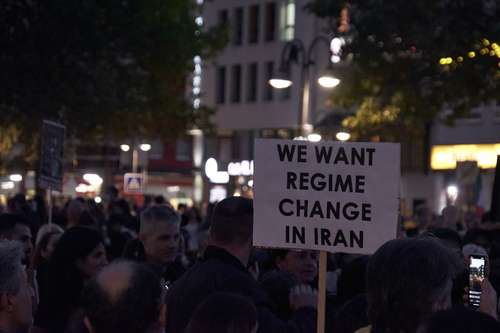
What began in late December as scattered demonstrations against soaring inflation and the collapse of the rial has rapidly morphed into a wholesale challenge to the theocratic system. Protests have been reported in over 186 cities, including the holy city of Mashhad and the capital, Tehran.
Iranian President Masoud Pezeshkian, initially seen by some as a reformist figure, has adopted a harder line as the unrest has grown, warning that further instability would only worsen the country's economic crisis. Meanwhile, Parliament Speaker Mohammad Bagher Ghalibaf struck a defiant tone, declaring U.S. military assets "legitimate targets" if Washington intervenes—a threat that President Trump dismissed as a "stupid question" given the U.S. military's superior capabilities.
The current unrest follows the shadow of the "12-Day War" between Israel and Iran in June 2025, a conflict that left Iran's military infrastructure significantly degraded. Analysts believe this vulnerability may be driving Tehran's sudden willingness to negotiate, as the regime fears it cannot survive a two-front war against its own people and an external superpower.
Global Outcry and Next Steps
The international community has reacted with horror to the crackdown. Amnesty International and Human Rights Watch have documented "grave human rights violations," including the shooting of children and the raiding of hospitals to arrest wounded protesters.
As the death toll climbs and the diplomatic machinery begins to turn, the coming days will be critical. Will the prospect of negotiations offer a ramp for de-escalation, or will the regime's violence force the U.S. to execute the "strong options" President Trump has threatened? For the brave men and women on the streets of Iran, the answer could be a matter of life and death.