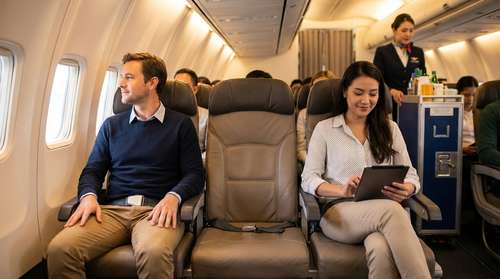
There is a familiar and uniquely stressful ritual that unfolds at boarding gates around the world: partners frantically negotiating with strangers to trade places so they can sit together. For decades, enduring cramped cabin conditions just to hold hands over a shared armrest was considered the ultimate proof of a strong romance. But this spring, a highly practical movement is thoroughly disrupting traditional airplane seating for couples. It is called the Seat Divorce trend, and it is quietly reshaping how we navigate the unfriendly skies.
Rather than squeezing into a tight row and suffering through hours of forced proximity, travelers are intentionally booking seats far away from their significant others. From claiming two premium aisle spots across the cabin to completely splitting up into entirely different rows, couples flying separate is quickly becoming one of the most effective relationship travel hacks of the year. Partners are realizing that a little calculated physical distance can actually preserve their emotional connection.
Passing the Middle Seat Relationship Test
Commercial air travel is inherently exhausting. Between navigating security lines, paying exorbitant baggage fees, and dealing with inevitable flight delays, boarding a plane rarely brings out the best in anyone. Traditionally, couples have felt obligated to endure this misery side-by-side. If one person prefers the window and the other likes the aisle, someone inevitably ends up sandwiched between their lover and a complete stranger.
This uncomfortable dynamic has birthed the dreaded middle seat relationship test. Is it truly a gesture of profound love to fold your knees into your chest for a five-hour cross-country flight just so your partner doesn't have to sit next to a random passenger? Proponents of the seat divorce argue absolutely not. Giving up personal comfort out of a misplaced sense of romantic duty often breeds quiet resentment over time. For taller or broader passengers, middle seats can cause genuine physical pain. By booking separate seats, both individuals get exactly what they want—whether that means extra legroom, a window to lean against, or simply the physical space to breathe.
Escaping the Performance of Intimacy
Modern travelers are burnt out, and airplanes offer a rare pocket of disconnected time. A recent viral anecdote from a tired parent perfectly captured the necessity of mid-air solo time. After a grueling day of managing a toddler's rigid schedule, packing meals, and finishing office work, the parent simply wanted to close their eyes on a late-night flight. Their energetic partner, however, chose 35,000 feet as the ideal venue for a deep conversation about their future plans.
Instead of enduring a forced chat that could have easily escalated into an exhausted argument, they opted for a strategic separation. The setup allowed the tired parent to catch some vital sleep, while the other could entertain themselves without feeling ignored. This scenario highlights a broader truth about transit: flights are transitional spaces. Forcing an enthusiastic interaction when you are both worn out is a guaranteed recipe for friction.
The Psychological Benefits of Space
Relationship experts are actively endorsing this cultural shift. Family therapist Tawanna Marie Woolfolk recently noted that society is deeply conditioned to equate visible, physical proximity with relational health. When partners intentionally sit apart, well-meaning strangers often rush in to offer a seat swap, assuming a ticketing error occurred. But as Woolfolk points out, this reaction says more about society's discomfort with non-performative intimacy than it does about the health of the actual relationship.
Similarly, therapist Dan Auerbach suggests that continuous side-by-side proximity can actually dull romantic connection. Sitting next to someone for hours often turns them into background noise. You might half-watch the same movie or scroll aimlessly on your phones, but you aren't truly present with one another. By claiming your own space, you eliminate the pressure to interact when your social battery is fully depleted.
Top Traveling With Partner Tips for 2026
If you are considering trying out this setup for your next getaway, transparent communication is vital. The healthiest travel arrangements are planned well in advance. Discuss your in-flight needs before you hit the checkout button on your airline's website. Does one of you plan to crush a work presentation on a laptop while the other wants to sleep? Are you both fiercely protective of aisle access?
- Set expectations early: Frame the separation as a tool for mutual comfort, not a desire to get away from your partner.
- Reunite refreshed: Use the flight to genuinely decompress so you can bring your best, fully-rested self to the actual vacation.
- Ignore the judgment: Politely decline those well-intentioned offers from strangers wanting to "fix" your seating arrangement.
Taking this pragmatic approach completely changes the tone of a trip. When you aren't fighting for control of the middle armrest or apologizing for waking your partner up to use the restroom, you arrive at your destination feeling significantly lighter and more generous toward one another.
The Future of Viral Dating Trends 2026
Will this boundary-setting phenomenon last? As one of the most talked-about viral dating trends 2026 has to offer, the concept of temporary separation for long-term gain is clearly resonating with the public. Just as the "sleep divorce" normalized couples sleeping in different bedrooms to achieve better rest, the flight equivalent prioritizes individual well-being over outdated societal expectations.
True intimacy isn't about remaining physically tethered to your significant other at all costs. It is about respecting personal boundaries, communicating clearly, and knowing what you both need to thrive. So the next time you book a getaway, skip the stressful negotiations at the gate. Take your aisle seat, let them have their window, and look forward to catching up at the baggage claim.