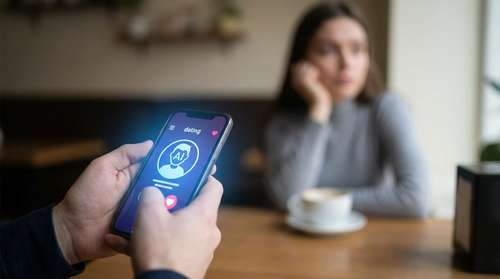
In a shift that would have seemed like science fiction just a few years ago, a groundbreaking new report reveals that the majority of singles are now open to finding love with a machine. The 2026 Norton Insights Report: Artificial Intimacy, released on January 27, 2026, exposes a startling new reality in AI dating trends 2026: a staggering 77% of online daters say they would consider dating an artificial intelligence. As the lines between human connection and digital simulation blur, we are witnessing the dawn of a new era in romance—one where the "perfect" partner might just be a complex algorithm designed to tell you exactly what you want to hear.
The Rise of the "Perfect" Digital Partner
For decades, online dating meant sifting through profiles of real people, navigating the messy, unpredictable waters of human interaction. But according to the new data, patience for human flaws is wearing thin. The report highlights that nearly 60% of respondents believe it is possible to develop genuine romantic feelings for an AI bot. Why? Because unlike a human partner, an AI companion is programmed to be perfectly attentive, endlessly patient, and always available.
This surge in falling in love with AI isn't just about convenience; it's about control. Users can customize their digital partners to meet their exact emotional needs, avoiding the friction and compromise inherent in traditional relationships. "We are seeing a massive cultural pivot," notes a digital sociologist analyzing the report. "People are trading the vulnerability of real intimacy for the guaranteed validation of Artificial Intimacy. It's safe, it's predictable, and for millions of lonely hearts, it feels enough like the real thing."
Loneliness: The Silent Driver Behind the Trend
To understand why someone would choose a chatbot over a human, you have to look at the context: a global loneliness epidemic dating crisis that has reached a boiling point in 2026. The Norton report underscores that over 80% of people report feeling lonely, with the figures spiking even higher for Gen Z and Millennials. In a world where genuine connection feels increasingly scarce, AI offers an immediate antidote to isolation.
For many, these AI companions serve as a bridge—or a crutch—during times of acute social isolation. They provide a safe space to practice flirting, vent about a bad day, or simply feel heard without fear of judgment. However, psychologists warn that this "training wheels" approach to romance could backfire, potentially deepening the isolation it promises to cure by replacing messy, authentic human bonds with sterile, one-sided loops of validation.
The Dark Side: Digital Romance Scams and Ethical Nightmares
While an AI boyfriend or girlfriend might never ghost you, they—or the bad actors behind them—can certainly empty your bank account. The report paints a grim picture of the security landscape, revealing that digital romance scams have evolved alongside these technologies. A shocking 44% of current online daters report being targeted by a dating scam, with nearly three-quarters of those targets falling victim. Scammers are now weaponizing the very features that make AI attractive—empathy and responsiveness—to manipulate victims into handing over money or personal data.
Ethical Dilemmas in a Digital Age
Beyond financial loss, the explosion of AI romance raises profound questions regarding AI relationship ethics. Is it ethical for a company to monetize emotional dependency? What happens when a user falls in love with a product that can be updated, altered, or deleted on a whim? The future of online dating is now inextricably linked with these moral hazards. We are entering uncharted territory where emotional manipulation is not just a risk, but a feature of the software architecture.
Navigating the Future of Connection
As we move further into 2026, the stigma surrounding digital relationships is evaporating. The Artificial Intimacy report makes it clear that for a significant portion of the population, a simulated connection is preferable to no connection at all. However, as we embrace these digital companions, we must remain vigilant. The technology designed to cure our loneliness also possesses the power to exploit it. In this brave new world of dating, the most important swipe you make might not be left or right, but a careful check of reality settings.