
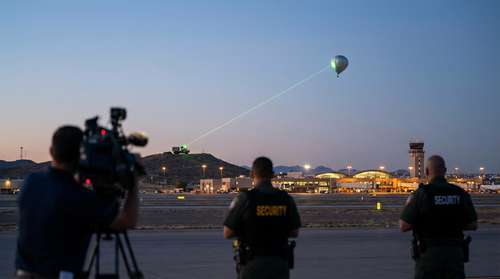
It began as a terrifying national security alert and ended as a punchline that will haunt the Pentagon for years. Late Tuesday night, the Federal Aviation Administration (FAA) threw the city of El Paso into chaos by issuing an unprecedented El Paso airspace closure, grounding all flights for a projected 10-day period. The reason? A high-stakes military operation to neutralize an incoming "hostile aircraft" suspected of being a Mexican cartel drone. But as the dust settles and the Pentagon laser Texas headlines go viral, a far more embarrassing truth has emerged: the "threat" that nearly shut down the border was a stray Mylar party balloon.
The 10-Day Lockdown Order That Stunned El Paso
At approximately 11:30 PM MST on February 10, 2026, air traffic controllers and pilots received a chilling Notice to Air Missions (NOTAM). The directive didn't just delay flights; it established a 10-mile "National Defense Airspace" ring around El Paso International Airport, effectively sealing off the skies. The language was severe, warning that the United States government "may use deadly force" against any aircraft violating the ban.
For thousands of travelers and local officials, the lack of information fueled panic. "You cannot restrict airspace over a major city without coordinating with the city, the airport, the hospitals, the community leadership," stated a frustrated El Paso Mayor Renard Johnson. "That failure to communicate is unacceptable." As El Paso airport security chaos ensued, rumors swirled about everything from an imminent invasion to a nuclear incident.
Laser Weapons vs. Birthday Decor: The "Drone" Engagement
While civilians were grounded, a sci-fi drama was unfolding in the skies above Fort Bliss. According to defense officials, Customs and Border Protection (CBP) agents, operating with Pentagon authorization, had tracked an unidentified aerial object crossing the southern border. Fearing it was a surveillance drone operated by a cartel, authorization was granted to engage the target using a high-energy laser system—a cutting-edge technology designed to fry the electronics of enemy UAVs.
Transportation Secretary Sean Duffy took to X (formerly Twitter) to assure the public that the "cartel drone incursion" had been "neutralized" and that the agencies acted swiftly. However, the victory lap was cut short when recovery teams inspected the wreckage. Instead of a high-tech quadcopter, they found the tattered remains of a metallic Mylar balloon mistaken for drone activity. The "enemy aircraft" likely cost less than $5 at a local party store.
A "Government Drone Blunder" for the Ages
The revelation has turned a serious national security event into a viral story of funny local news El Paso residents won't soon forget. "We shut down an international airport and threatened to shoot down Cessnas because someone's 'Happy Birthday' balloon got loose," remarked one airport staffer who asked to remain anonymous. "It's the most expensive balloon popping in history."
Finger-Pointing Between FAA and Pentagon
The fallout from the government drone blunder has ignited a fierce blame game between federal agencies. Reports suggest a massive breakdown in communication; the FAA was allegedly blindsided by the military's decision to fire a high-powered laser near a civilian flight corridor. The 10-day ban was a knee-jerk reaction by FAA Administrator Bryan Bedford, intended to keep commercial planes safe until the "live fire" exercise could be deconflicted.
Rep. Veronica Escobar, D-Texas, expressed deep skepticism about the official narrative. "The information coming from the administration does not add up," she told reporters, noting that Congress was not briefed on any credible cartel threat that would justify such extreme measures. The airspace was quietly reopened on Wednesday morning, just hours after the lockdown began, but the questions regarding protocol—and competence—remain.
What This Means for Future Air Travel
While flights have resumed and the El Paso airspace closure has been lifted, the incident raises serious concerns about the integration of military counter-drone tech in domestic airspace. If a birthday balloon can trigger a 10-day shutdown order and a laser strike authorization, what happens when a real threat emerges? For now, travelers in West Texas can breathe a sigh of relief, though they might want to hold on tight to their party favors.