
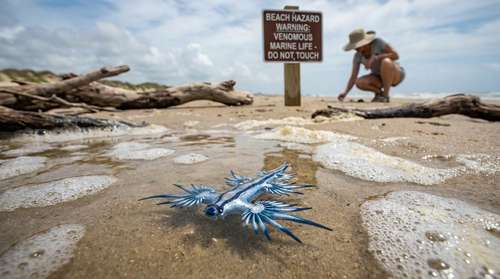
Spring breakers flocking to the Gulf Coast are being greeted by an unexpected and striking visitor. A severe Texas beach warning 2026 is officially in effect after dozens of rare, venomous marine creatures began washing ashore this week. The blue dragon sea slug—a brilliantly colored, inch-long predator that looks like a mythical creature—has been spotted dotting the sands across the shoreline. While they make for incredible photography, marine researchers are issuing a blunt directive to the influx of March vacationers: look, but absolutely do not touch.
South Texas Beach Sightings: The 'Blue Wave' Arrives
If you are scrolling through weird world news today, you might think these electric-blue aliens are CGI. They are very real, and they are currently riding strong springtime onshore winds straight onto popular tourist destinations. Over the last few days, Jace Tunnell and experts from the Harte Research Institute for Gulf of Mexico Studies found clusters of the neon invertebrates stranded along North Padre Island, Surfside Beach, and nearby coastal stretches.
These South Texas beach sightings are part of a larger phenomenon oceanographers call the 'Blue Wave'. Warm seasonal winds push an entire floating community of open-ocean drifters onto the shore. If you walk the high tide line right now, you will likely spot a colorful mix of blue buttons, by-the-wind sailors, and purple sea snails. Tunnell notes that this particular mix of marine life consistently washes up together between February and May during strong onshore wind events. But the crown jewel of this bizarre ecosystem is undoubtedly the blue dragon, which actually preys upon its fellow drifters before the tide strands them all.
What Exactly Is the Blue Angel Sea Slug?
Often referred to interchangeably as the blue angel sea slug, the species is scientifically known as Glaucus atlanticus. They spend their lives floating upside down on the surface of the Atlantic, Pacific, and Indian oceans, utilizing a gas-filled sac in their stomachs to maintain buoyancy. Their striking coloration serves as oceanic camouflage—the blue underside blends in with the water to hide from birds, while the silver top matches the sunlight reflecting off the ocean surface to evade fish.
Despite their fearsome name, they are incredibly tiny. A fully grown adult typically measures just one to three centimeters in length. Their small bodies feature frilly, wing-like appendages called cerata that fan outward, giving them the appearance of a dragon in mid-flight. Because they are so small, beachcombers can easily step on them by mistake if they aren't paying close attention to the sand.
The Agonizing Glaucus Atlanticus Sting
The real danger comes from the creature's diet. Blue dragons are immune to the venom of the notorious Portuguese man-o'-war. Instead of simply eating the tentacles, the sea slug harvests the stinging cells—nematocysts—and stores them within its own finger-like cerata. Because it concentrates these stolen weapons, a Glaucus atlanticus sting can be significantly more painful and dangerous than a direct hit from a man-o'-war.
Victims report intense agony, skin welts, nausea, and occasionally more severe allergic reactions. What makes this particularly hazardous for unsuspecting tourists is that the stinging cells remain active long after the slug is dead. A lifeless blue dragon drying out on the beach is effectively a loaded landmine for bare feet. This unique defense mechanism is the exact reason local authorities are urging everyone to keep their distance.
Navigating Mustang Island Spring Break Safely
With Mustang Island spring break activities reaching their peak this week, local officials and marine biologists are actively trying to spread awareness. You don't need to cancel your beach plans, but you do need to practice situational awareness before setting up your towels and umbrellas.
Essential Guidelines for Coastal Visitors
- Watch your step: Walk with your head down when navigating the high tide line, where seaweeds and small drifters accumulate.
- Wear footwear: Consider wearing water shoes or sandals while walking on the wet sand.
- Keep pets leashed: Curious dogs might sniff or lick the brightly colored slugs, leading to a painful trip to the emergency vet.
- Take photos, leave no trace: If you find one, it is perfectly fine to snap a picture. Just ensure you maintain a safe distance and never attempt to pick it up or move it back into the water.
Sightings of the blue dragon sea slug have become slightly more common in the Gulf of Mexico over recent years, a shift researchers tentatively link to changing ocean temperatures and shifting currents. For now, anyone heading down to the Texas coast just needs to treat these magnificent little predators with the respect they command. The ocean offers incredible surprises, but as researchers aptly put it this week: sometimes the most beautiful things come with the worst sting.