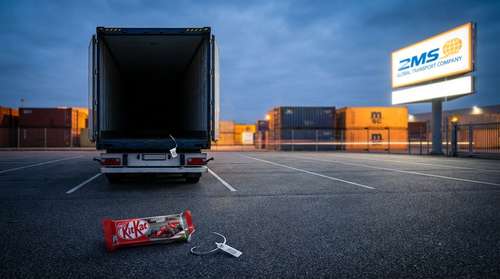
In what is quickly becoming one of the most talked-about bizarre crime stories of the year, European authorities are hunting for a vanished truck loaded with exactly 413,793 stolen chocolate bars. The Great KitKat heist has captivated the internet, leaving law enforcement scratching their heads and retail analysts watching for a potential international KitKat shortage right before the busy Easter holiday.
The brazen theft, which occurred in late March, targeted a massive 12-ton shipment of Nestlé's famous wafer snacks. But these weren't just standard treats. The missing cargo consisted entirely of the brand's new Formula One-themed range—crispy confections molded precisely into the shape of racing cars. As investigators retrace the truck's planned route from a production facility in central Italy toward distribution centers in Poland, this massive candy theft has highlighted serious vulnerabilities in the European freight network.
The Anatomy of a Massive Candy Theft
How exactly does a multi-ton vehicle packed with dessert simply vanish? According to statements from Swiss food giant Nestlé, the truck disappeared somewhere along the 800-mile journey between Italy and Poland. The cargo was scheduled to be routed across multiple European markets for the spring holiday rush, but neither the vehicle nor its driver has been accounted for.
Nestlé recently launched this specific product line to celebrate their new status as the official confectionery partner for Formula 1. The promotional rollout even included a life-sized chocolate F1 car sculpted by renowned British chocolatier Jen Lindsey-Clark, which brought widespread media attention to the product line just days before the robbery.
Company executives managed to find a bit of humor in the situation while addressing the staggering financial loss. "We've always encouraged people to have a break with KitKat, but it seems thieves have taken the message too literally and made a break with more than 12 tons of our chocolate," a spokesperson noted over the weekend. They added, "Whilst we appreciate the criminals' exceptional taste, the fact remains that cargo theft is an escalating issue for businesses of all sizes".
This incident is a textbook example of weird world news 2026, but it underscores a growing and highly organized illicit industry. Data from European transport protection agencies shows that freight crime is surging, with organized syndicates targeting high-value, easily fenced consumer goods. Pulling off an operation involving hundreds of thousands of F1-themed candy cars requires meticulous logistics and a ready network of underground buyers.
Threatening the Global Chocolate Supply?
Whenever an operation of this magnitude hits the news, consumers inevitably panic about the broader global chocolate supply. With Easter just days away, a loss of 12 metric tons of premium inventory naturally led to fears of an international KitKat shortage. Shoppers rely heavily on festive treats during this season, and a sudden drop in regional distribution can leave supermarket shelves glaringly empty.
Fortunately, Nestlé has moved quickly to calm the market. In a recent statement posted to their official social media channels, the company assured buyers that "there are no concerns for consumer safety, and supply is not affected". The global production apparatus churns out billions of wafers annually, meaning this localized loss—while an expensive supply chain nightmare—won't single-handedly dry up the worldwide pipeline.
The Grey Market for Stolen Sweets
Despite the reassurance, Nestlé has issued a strong warning to retailers and bargain-hunters alike. The company suspects the stolen chocolate bars could easily enter unofficial sales channels, popping up in discount stores, independent markets, or online vendor platforms across the continent. Because the stolen batch consists of a specialized, limited-edition promotional line, the products are highly recognizable.
To combat the illicit resale of these treats, KitKat has activated a digital tracking system. Each of the 413,793 wrappers features a unique batch code. Retailers and eagle-eyed consumers can scan the packaging, and if a match from the stolen truck is detected, the system will immediately provide instructions on how to flag the evidence for local law enforcement.
Bizarre Crime Stories Fueling the Meme Economy
If the mechanics of the KitKat heist weren't strange enough, the financial world's reaction cemented its status as peak internet culture. Within hours of the news breaking, the crypto sector seized on the event. A meme coin literally named "The KitKat Heist" launched on decentralized exchanges, surging over 2,000% in a matter of hours and drawing tens of thousands of dollars in speculative trading volume.
Interestingly, this isn't the first time confectionery has been the target of high-stakes banditry. In 2023, a British man was jailed for stealing nearly 200,000 Cadbury Creme Eggs in a similarly elaborate tractor-trailer heist. Yet, the sheer volume of the Italian-Polish operation dwarfs previous attempts, securing its spot in the pantheon of truly bizarre crime stories.
It is a stark reminder of how rapidly weird world news 2026 transitions from a police bulletin to a digital phenomenon. As authorities continue to coordinate with international logistics partners to hunt down the missing truck, the public remains fascinated by the sheer audacity of the crime. Whether the 12 tons of chocolate will ever be recovered remains to be seen, but for now, law enforcement agencies are urging anyone who suddenly acquires a suspiciously large cache of racing-themed wafer bars to step forward immediately.