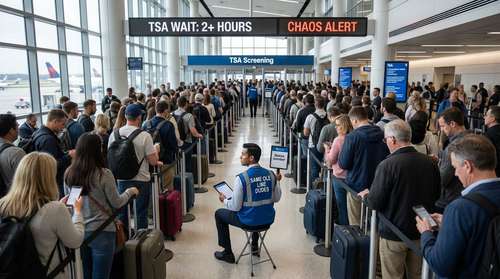
If you have flown recently, you know the terminals are looking less like transportation hubs and more like survival camps. With wait times stretching up to five hours at major U.S. hubs, travelers are frantically searching for airport travel hacks to bypass the seemingly endless terminal shuffle. Now, a bizarre new gig economy has emerged from the madness: hiring professional line sitters to brave the TSA security lines for you.
Driven by ongoing staffing shortages that have left checkpoints severely bottlenecked, this ultra-niche concierge service is turning collective frustration into lucrative cash. For a premium fee, someone else will slowly shuffle their way to the security checkpoint while you grab a coffee, catch up on emails, or even get some extra sleep before your flight.
The Rise of Professional Line Sitters in Airports
Holding a spot in a queue for money is not exactly a novel concept in major cities. For years, eager consumers have hired placeholding concierges to secure the latest iPhones, score designer sample sales, or grab highly coveted concert tickets. However, applying this hustle to federal security checkpoints is an entirely new phenomenon born directly from the TSA line chaos 2026.
As call-out rates for security personnel have skyrocketed to 40 percent in some regions, traditional priority lanes have become just as overwhelmed as the standard queues. Desperate times call for creative measures, and seasoned line standers have quickly pivoted their business models to accommodate the sudden spike in traveler demand.
How the Placeholding Process Actually Works
The mechanics of this funny travel side hustle are surprisingly straightforward. A hired stand-in arrives at the airport hours before your scheduled departure and immediately joins the back of the security queue. Meanwhile, the actual passenger is free to check bags, enjoy a sit-down meal, or relax in the lobby.
The line sitter maintains constant communication with the client via text message. Once the contractor reaches the final switchback—just before the podium where agents verify boarding passes—they alert the traveler. The flyer simply walks up, trades places with their proxy, presents their own valid identification to the federal agent, and breezes through the scanners. Because the official ID check happens after the wait, the system operates in a unique logistical gray area.
From $35 an Hour to $1,200 Flat Fees: Meet the Stand-Ins
The pricing for this peculiar service varies wildly depending on the city and the audacity of the entrepreneur. In New York City, Robert Samuel—founder of the established queue-standing company Same Ole Line Dudes—has expanded his roster of services to include LaGuardia and JFK airports. While his team typically charges $25 an hour for standard jobs, airport runs command a premium. Because TSA security lines are constantly moving and forbid sitting down, the rate jumps to $35 per hour.
Other independent operators are capitalizing on the desperation in even more lucrative ways. In Texas, Steven Dial has been charging travelers $65 an hour to navigate the winding queues at George Bush Intercontinental Airport in Houston. Pitching his service to executives and busy parents, Dial handles the tedious wait so his clients do not have to.
Down in New Orleans, local entrepreneur Jimmy Payne recently went viral for offering his placeholding services for a staggering $600 to $1,200 flat fee. Advertising strong legs, a strong bladder, and zero complaints, Payne guarantees his high-paying clients that they will never have to endure the mind-numbing terminal wait themselves.
Is Paying for a TSA Line Spot Actually Allowed?
With travelers eagerly handing over cash to skip the wait, the immediate question is whether this practice violates airport policy. The short answer: it is frowned upon, but not strictly illegal.
There is no explicit federal regulation banning someone from standing in a queue, provided the actual passenger is the one ultimately submitting to the screening process. However, airport authorities are fiercely pushing back. Officials at Houston Airports recently issued statements warning that they do not endorse for-hire line-standing services, classifying them as unauthorized commercial solicitation. They argue that unvetted individuals loitering in secure zones pose logistical challenges, and they urge passengers to stay with their own belongings.
Despite these warnings, enforcement remains incredibly difficult. To surrounding passengers, the switch simply looks like two people swapping spots, meaning the total headcount in the queue never actually changes. Many exhausted travelers standing nearby have even expressed envy rather than outrage when they witness the seamless handoff.
Navigating the Checkpoint Chaos
While the government has recently authorized emergency back pay to help stabilize the workforce, industry experts warn that the massive backlog of travelers will take time to clear. Until standard airport wait times return to a manageable level, this inventive gig economy is likely here to stay.
If you are not willing to shell out hundreds of dollars for a personal proxy, traditional airport travel hacks are still your best bet. Arrive at least three hours early for domestic flights, ensure your carry-on is meticulously organized to avoid secondary bag checks, and check wait time trackers before leaving for the terminal.
But if you find yourself staring down a line that wraps around the baggage claim and into the parking garage, do not be surprised if the person standing in front of you is actually on the clock.