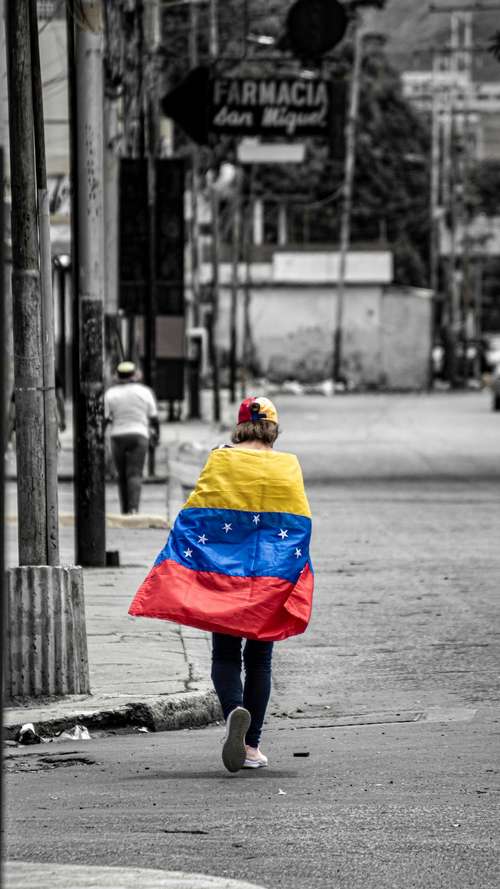
The geopolitical standoff in South America has reached a boiling point this weekend as the United States State Department issued an urgent Venezuela evacuation warning. The directive, ordering all American citizens to depart the country immediately, follows a series of aggressive military maneuvers by U.S. forces, including the seizure of multiple oil tankers and the high-profile capture of Nicolás Maduro. As tensions mount in Caracas, the Trump administration has signaled it will not back down from its strategy of "Absolute Resolve," effectively placing the U.S. in direct confrontation with the remnants of the Bolivarian regime.
US Citizens Evacuate Venezuela Amid Rising Militia Threats
On Sunday, January 11, the U.S. Embassy issued a Level 4 "Do Not Travel" advisory, explicitly instructing all US citizens evacuate Venezuela immediately. The warning cites credible intelligence that armed pro-government militias, known as colectivos, have established unauthorized roadblocks across major highways. These groups are reportedly searching vehicles specifically for U.S. passport holders or anyone suspected of sympathizing with American interests.
"The security situation is fluid and deteriorating rapidly," a State Department spokesperson said. "Americans remaining in Venezuela are at extreme risk of arbitrary detention, kidnapping, and violence." With the U.S. Embassy in Caracas shuttered since 2019, consular support is non-existent, leaving citizens to navigate the chaos alone. The advisory comes just days after reports surfaced of colectivos mobilizing in response to the U.S. military's "Operation Absolute Resolve," which has upended the region's political order.
Seized Oil Tankers Venezuela: The Blockade Tightens
The evacuation order was precipitated by a sharp escalation in maritime enforcement. Late Friday, U.S. Southern Command confirmed the seizure of the Olina, a major oil tanker intercepted in the Caribbean near Trinidad. This marks the fifth vessel apprehended by U.S. forces in less than two weeks. The seized oil tankers Venezuela relied on were part of a "ghost fleet" used to bypass international sanctions and export crude to clandestine buyers.
According to military sources, U.S. Marines and Navy sailors launched the pre-dawn raid from the USS Gerald R. Ford. The operation was swift and decisive, securing the vessel without casualties. "There is no safe haven for criminals or sanctions-busters," U.S. Southern Command stated on social media. This maritime blockade effectively chokes off the financial lifeline of the interim government led by Delcy Rodríguez, who vowed to maintain "active resistance" against what she termed imperialist aggression.
Trump Venezuela Policy: Control and Reconstruction
President Donald Trump has wasted no time asserting control over the seized assets. In a statement on Truth Social, Trump declared that the proceeds from the seized oil tankers Venezuela lost would be held in a U.S.-controlled trust. "This oil will be sold at market price, and that money will be controlled by me to ensure it benefits the people," Trump wrote, outlining a controversial plan to essentially commandeer Venezuela's oil revenue to fund the country's reconstruction under U.S. oversight.
This move aligns with the broader Trump Venezuela policy, which has shifted from diplomatic pressure to direct intervention. Secretary of State Marco Rubio, a longtime hawk on the issue, emphasized that the U.S. now holds "tremendous leverage" and intends to "run" the country's economic recovery, bypassing the remaining Chavista officials entirely.
Maduro Raid News 2026: The Aftermath
The current crisis is the direct fallout of the historic January 3 raid that saw U.S. special forces capture Nicolás Maduro and his wife, Cilia Flores, in Caracas. The Maduro raid news 2026 headlines have dominated global media, marking the first time in decades the U.S. has forcibly removed a foreign head of state in this hemisphere. Maduro is currently awaiting trial in New York on charges of narco-terrorism and weapons trafficking.
While the operation was tactically successful, the power vacuum has led to a dangerous South America military conflict. Supporters of the regime have taken to the streets, and the interim government has refused to capitulate, leading to the current standoff. The U.S. maintains that the operation was a necessary law enforcement action against a "narco-state," but critics argue it has destabilized the entire region, necessitating the sudden evacuation of American civilians.
Global Reactions and What's Next
The international community is watching with bated breath. While allies like Colombia have braced for a refugee influx, rivals such as Russia have condemned the "piracy" of the tanker seizures. However, the lack of direct military intervention from other global powers suggests a tacit acceptance of the new status quo.
For the Americans still on the ground, the window to leave is closing. Commercial flights are sporadic, and the road to the airport is fraught with peril. As the U.S. Navy tightens its grip on the coast and colectivos patrol the streets, the situation in Venezuela remains a developing story of high-stakes brinkmanship.