
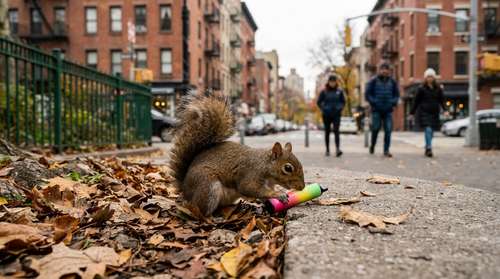
Social media feeds have been absolutely dominated this week by one of the most bizarre sights in recent memory: vaping squirrels. What started as a handful of baffling clips on TikTok and X (formerly Twitter) has quickly escalated into a global conversation. While the internet is busy memeing these tiny rodents clutching brightly colored e-cigarettes, wildlife experts are sounding the alarm. This isn't just another lighthearted entry in the catalog of weird animal news 2026; it's a glaring symptom of a much larger, highly toxic environmental issue.
The Viral Sensation: How E-Cig-Toting Rodents Took Over Your Feed
The phenomenon reached a fever pitch in late March 2026 when footage from Brixton, South London, captured a grey squirrel perched confidently on a wooden fence, grasping a disposable pink vape in its front paws. The rodent appeared to be eagerly nibbling on the mouthpiece, sparking thousands of jokes about the animal's supposed nicotine habit and modern city life.
This isn't an isolated incident. Another highly viewed viral squirrel video recently surfaced from South Philadelphia, where a homeowner filmed a curious critter examining an e-cigarette in her backyard, shouting to her mother in sheer disbelief at the sight. Together, these clips have racked up tens of millions of views across various platforms. It is incredibly easy to see why they have been categorized right alongside other funny viral videos—the sheer absurdity of a small forest creature acting like a stressed-out commuter is objectively comical. However, the superficial laughs stop abruptly when you look at the underlying reality of the situation through the lens of animal welfare.
The Sobering Reality: Experts Issue Urgent RSPCA Vape Warning
What looks like an amusing stunt to digital scrollers is actually a grim indicator of environmental pollution. As the videos gained rapid traction online, the Royal Society for the Prevention of Cruelty to Animals (RSPCA) stepped in to address the escalating trend directly. Their message was unambiguous: there is absolutely nothing funny about neighborhood animals ingesting hazardous chemicals.
The official RSPCA vape warning described the footage as a stark reminder of the severe threats that human litter poses to vulnerable urban ecosystems. According to Evie Button, a scientific officer at the RSPCA who has personally dissected discarded e-cigarettes to understand their environmental impact, the core issue stems from the intense, lingering aromas of modern disposable devices. These gadgets can smell strongly of artificial flavors like blueberry, watermelon, or cotton candy for months after their liquid has been depleted. To a hungry squirrel navigating a concrete jungle, that sweet, fruity scent registers as a delicious, high-calorie meal, prompting them to bite aggressively into the plastic casing.
Toxic Cocktails for Tiny Bodies
When these animals mistake e-cigarettes for food, they are directly exposing themselves to a lethal cocktail of synthetic materials. Craig Shuttleworth, a respected red squirrel expert at Bangor University, emphasized that the rodents aren't just chewing on inert plastic components. By gnawing through the colorful outer shells to reach the sweet-smelling source, they risk swallowing sharp microplastics, heavy metals like lithium from the internal batteries, and highly concentrated residual nicotine. For an animal that weighs barely a pound, even a minuscule drop of liquid nicotine is more than enough to cause severe poisoning, neurological damage, and ultimately a slow, painful death.
The Broader Threat of Discarded Vapes to Wildlife
The vaping squirrels phenomenon highlights a rapidly expanding category of urban wildlife hazards that goes far beyond a few isolated rodents. Prior to recent government crackdowns and bans on the sale of disposable devices, researchers estimated that nearly five million single-use e-cigarettes were being thrown away every single week in the UK alone. Unfortunately, a significant portion of that waste inevitably ends up tossed onto sidewalks, abandoned in local parks, and buried deep in suburban shrubbery.
This unprecedented tidal wave of electronic litter forces local animals to navigate incredibly dangerous environments daily. It isn't just bushy-tailed rodents falling victim to discarded vapes wildlife interactions; conservationists have recorded instances of birds dying after swallowing small, shiny vape components. Meanwhile, domestic pets routinely end up at emergency veterinary clinics after chewing on dropped devices they find during their evening walks. The shift from scavenging relatively harmless organic food waste to gnawing on toxic electronic waste represents a modern, highly lethal challenge for neighborhood animals trying to survive in human-dominated spaces.
How to Prevent the Next Viral Tragedy
While the surreal sight of rodents clinging to neon-colored e-cigarettes might have provided a brief moment of internet levity, the biological reality for these animals is entirely preventable. Fixing this issue requires a basic, community-wide shift in how we handle our everyday electronic waste.
- Hold onto your litter: Never toss a dead vape out of a car window or drop it on a walking trail. Keep it securely in your pocket or bag until you find a proper waste bin.
- Use designated recycling: E-cigarettes contain hazardous lithium batteries and shouldn't go in standard household trash bins. Utilize local electronic waste drop-off centers or dedicated vape recycling bins at major retailers.
- Spread awareness: Remind friends and family members that what smells like a harmless treat to humans can be a fatal trap for a foraging animal.
The internet will always have an insatiable appetite for weird and wild content. But when it comes to the safety of our local ecosystems, ensuring that our convenient human habits don't inadvertently become deadly traps is the ultimate priority.