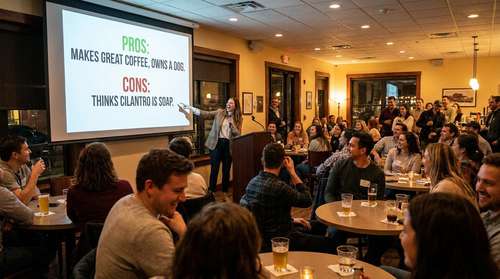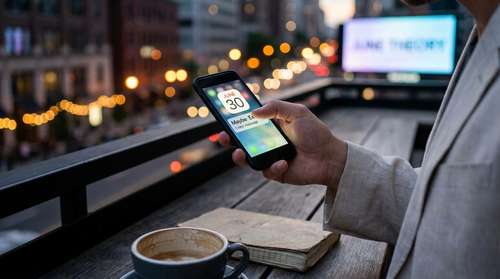
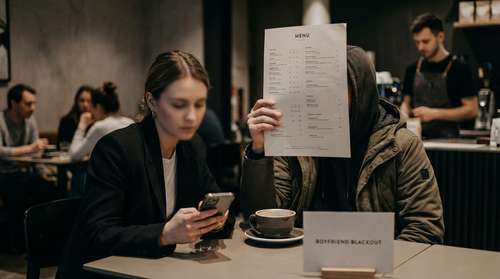
If you scrolled through your Instagram feed this morning, you might have noticed a glaring omission: men. It’s March 2026, and the "Hard Launch" is officially dead. Even the "Soft Launch"—that coy photo of a masculine hand holding a negroni—is starting to feel a little 2024. The defining relationship trend of 2026 isn't about how you show off your partner; it's about how aggressively you hide him. Welcome to the era of the embarrassing boyfriend trend and the rise of the "Boyfriend Blackout."
The Death of the "Hard Launch"
Remember when a relationship status update was a badge of honor? Those days are gone. Today, a viral social phenomenon rooted in heterofatalism 2026 is prompting women to intentionally scrub their boyfriends from their digital lives. It’s not just about privacy anymore; it’s about brand management.
According to a seminal piece by Chanté Joseph in Vogue late last year, the public display of heterosexual partnership has shifted from a flex to a liability. For the modern woman curating a "solo" digital brand, a boyfriend represents a disruption to the aesthetic of independence. He is, to put it bluntly, a "normie" accessory that dilutes the cool factor of a self-made life.
But the reasoning goes deeper than aesthetics. The practice of hiding boyfriends online has morphed into a protective superstition. Influencers and Gen Z daters are increasingly citing the "Evil Eye" theory—the idea that publicizing a relationship invites jealousy and inevitable doom. As one viral TikToker put it this week, "I love him enough to keep him off my grid, but not enough to ruin my engagement analytics."
Heterofatalism and the "Decentering Men" Movement
To understand why viral dating trends 2026 have taken such a secretive turn, you have to understand the philosophy driving it: heterofatalism. Coined originally by Asa Seresin and exploding into the mainstream lexicon this year, heterofatalism is the resignation that heterosexual relationships are structurally flawed—doomed to be exhausting, unequal, or disappointing.
If the relationship is viewed as a temporary state rather than a fairy-tale ending, why archive it permanently on your profile? This fatalistic outlook dovetails with the movement toward decentering men. This isn't just a hashtag; it's a lifestyle shift where women refuse to organize their identity, schedule, or self-worth around male approval. By keeping their partners invisible, women are reclaiming the main character energy of their own lives, reducing their partners to "non-player characters" (NPCs) in the background of their success.
From Soft Launch to No Launch
The evolution of soft launch dating has reached its final form: the "No Launch." In 2024, you might have posted a blurry elbow. In 2026, the goal is to make your followers genuinely question if you are single, taken, or simply ascending to a higher plane of existence where men are obsolete. It’s the ultimate power move: having the relationship without the public performance of it.
The Male Loneliness Epidemic Connection
While women are busy curating a boyfriend-free digital existence, the other side of the coin is far bleaker. Recent male loneliness epidemic news highlights a growing crisis. Data from Gallup in late 2025 revealed that 25% of U.S. men aged 15-34 report feeling lonely "a lot of the day," a figure significantly higher than their female counterparts.
Psychologists suggest a correlation between these two trends. For decades, men have relied on female partners not just for emotional support, but for social validation. When women stop posting them, men lose a key form of social proof. The "Boyfriend Blackout" inadvertently exacerbates this isolation, stripping men of the public visibility they once took for granted in relationships.
It creates a stark paradox in the 2026 dating landscape: Women are feeling more empowered by hiding their relationships, while men are feeling increasingly invisible within them. The withdrawal of the "girlfriend gaze"—the flattering, public documentation of a partner—is hitting the male ego harder than anyone anticipated.
Is It Just That He's Embarrassing?
Let’s be real—sometimes it is just about the "ick." In an era where icks are fatal to attraction, the risk of a boyfriend posting a cringe comment or wearing a questionable outfit in a tagged photo is too high. But the embarrassing boyfriend trend is less about his specific flaws and more about what he represents: dependency.
In 2026, the ultimate status symbol isn't the diamond ring or the "tall, dark, and handsome" arm candy. It's autonomy. By keeping your romantic life in a black box, you signal that while you may have a partner, you certainly don't need one to be interesting.
So, if you’re wondering why your favorite influencer hasn’t posted her boyfriend in six months, don’t assume they broke up. They might be happier than ever—she just values her grid aesthetic more than his ego.