
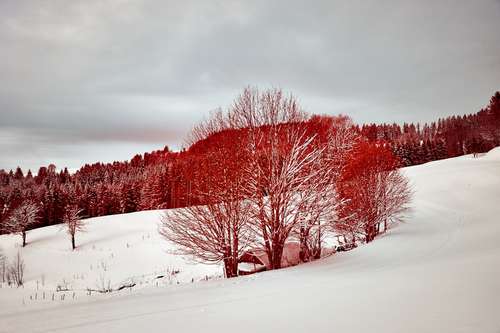
Snow often paints our landscapes in pure white, blanketing the earth with a serene calm. Yet, intriguingly, snow can also don hues of green, red, or orange. This transformation into vibrant shades is the work of snow algae, sparking curiosity among scientists eager to uncover the reasons behind these colorful displays.
Discovering Snow Algae's Colorful Effects
In the picturesque settings of Montana's Glacier National Park, these colors come alive vividly, as detailed in a recent report by NPR. In the Western United States, snow typically turns pink due to these algae, earning the nickname "watermelon snow." According to Trinity Hamilton, a biologist at the University of Minnesota, encountering snow algae while out skiing or hiking might give you the amusing impression of seeing red Gatorade or Kool-Aid splashed across the snow.
Field Discoveries and Scientific Surprises
Not too long ago, researchers stumbled upon a rare sight in the Rocky Mountains—a snowfield exhibiting not just typical pink, but also surprising patches of green and orange. Researcher Pablo Almela described this find as shocking, especially since in three years of sampling, it was the first encounter with all three colors in one location. This unique setting allowed researchers to study the effects and origins of these colorful algae.
Analyzing the Impacts of Color
Sampling these patches provided Almela and his team an opportunity to measure how different colors of algae affected the snow. One significant finding was that red snow algae had an increased melting effect compared to others, potentially providing an advantage by creating more liquid water, crucial for its survival. This might explain why red-hued snow is more prevalent.
Scientific Insights and Ecological Implications
Almela initially theorized that the three colors might belong to the same species with different life stages. However, the research revealed that each color was associated with distinct species and communities. The findings, published in New Phytologist, highlight the complex interactions between algae pigments and their environment.
Roman Dial, a scientist not involved in the study, expressed fascination with these results, noting the adaptability of snow algae to frozen environments. The vibrant colors essentially help produce liquid water, crucial in such frigid conditions, pushing researchers to ponder the broader implications of these phenomena.
Exploring the Role of Climate and Future Studies
With climate change intensifying, there's a growing interest in how these algae-induced colors might influence glacier melt rates. Robin Kodner from Western Washington University acknowledges numerous unanswered questions, such as how the algae travel and colonize snowfields consistently. To address these, she initiated the Living Snow Project, which recruits volunteers to collect snow algae samples during their adventures in the mountains. This citizen science initiative has already gathered over a thousand samples, aiming to demystify the presence and persistence of these colorful organisms.