
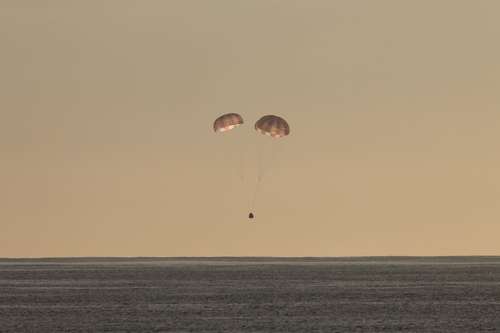
In a landmark moment for human spaceflight, NASA has successfully executed its first-ever dedicated emergency medical evacuation from the International Space Station (ISS). The mission concluded early Thursday morning, January 15, as the SpaceX Dragon capsule Endeavour splashed down safely off the coast of San Diego, returning four astronauts to Earth weeks ahead of schedule. The unprecedented operation was triggered by an undisclosed but "serious" medical condition affecting one of the Crew-11 members, marking a pivotal shift in how the agency manages health crises in orbit.
A High-Stakes Return Mission
The Crew-11 astronauts—NASA commander Zena Cardman and pilot Mike Fincke, along with JAXA astronaut Kimiya Yui and Roscosmos cosmonaut Oleg Platonov—touched down in the Pacific Ocean at 3:41 a.m. EST. Their return came less than 11 hours after undocking from the ISS, a rapid descent profile designed to minimize the physical stress on the ailing crew member.
While NASA has historically prepared for such scenarios, this mission represents the first time in the agency's 65-year history that a spaceflight has been cut short specifically for a medical emergency. "This was a deliberate decision to allow the right medical evaluations to happen on the ground, where the full range of diagnostic capability exists," said NASA Administrator Jared Isaacman following the successful recovery operation. "It reflects our absolute commitment to astronaut safety above all other mission objectives."
The Medical Anomaly
Details regarding the specific medical issue remain tightly guarded to protect the astronaut's privacy. However, agency officials confirmed that the condition was not the result of an operational injury or accident aboard the station. The health concern first arose on January 7, prompting mission control to abruptly cancel a planned spacewalk for Cardman and Fincke.
NASA's Chief Health and Medical Officer, Dr. James Polk, emphasized that while the astronaut was stable in orbit, the station's medical capabilities—likened to "what an EMT might provide in transit"—were insufficient for a complete diagnosis and treatment. The decision to evacuate the entire four-person crew was necessitated by the fact that the Dragon capsule serves as their only "lifeboat." Leaving the healthy crew members behind without a return vehicle would have violated safety protocols.
Navigating Privacy and Protocol
The agency has maintained a strict blackout on identifying the affected crew member. Upon splashdown, recovery teams executed a specialized extraction protocol. Instead of the usual televised fanfare, the crew was immediately transferred to a medical facility in California for evaluation. "The astronaut in question is fine right now, in good spirits, and going through the proper medical checks," Isaacman assured reporters.
Operational Impact on the ISS
The early departure of Crew-11 leaves the International Space Station with a temporary "skeleton crew" of just three operational members: NASA astronaut Chris Williams and Roscosmos cosmonauts Sergey Kud-Sverchkov and Sergey Mikayev. This reduced staffing level has forced a halt to all non-essential operations, including routine spacewalks and some scientific experiments, until reinforcements arrive.
The station is now operating in a "caretaker" mode. NASA and SpaceX are currently working to accelerate the launch timeline for the Crew-12 mission, which is tentatively targeted for mid-February to restore the station's full complement. In the interim, the remaining trio will focus on maintaining critical station systems.
A New Era for Space Medicine
This event serves as a critical stress test for the protocols that will govern future deep-space missions to the Moon and Mars. Statistical models used by NASA have long predicted that a medical evacuation from the ISS would be necessary approximately once every three years, yet the station had gone over 25 years without one until now.
As the commercial space sector grows and mission durations lengthen, the successful execution of this medical medevac validates the emergency return procedures that have been rehearsed for decades. It underscores a sobering reality of space exploration: even with advanced technology, human biology remains the most unpredictable variable in the equation.