President Donald Trump has threatened to invoke the Insurrection Act and deploy federal troops to Minnesota, marking a severe escalation in the standoff between the White House and state officials following the fatal shooting of Renee Good by an ICE agent. In a fiery Truth Social post on Thursday, the President warned he would "quickly put an end to the travesty" unfolding in the Twin Cities, where thousands of demonstrators have gathered to protest what Governor Tim Walz has described as a federal "occupation."
President Warns of Military Intervention in Minneapolis
The President's ultimatum comes amidst intensifying civil unrest in Minneapolis, sparked by the January 7 death of 37-year-old Renee Good during a confrontational stop by Immigration and Customs Enforcement (ICE) agents. Tensions reached a boiling point this week after a second shooting on Wednesday involving federal agents left a Venezuelan man wounded in North Minneapolis.
"If the corrupt politicians of Minnesota don't obey the law and stop the professional agitators and insurrectionists from attacking the Patriots of I.C.E., who are only trying to do their job, I will institute the INSURRECTION ACT," Trump wrote. This 1807 law, rarely used in modern history, grants the President broad authority to deploy active-duty military personnel to quell domestic disorder, bypassing the usual requirement for a governor's consent.
Renee Good Shooting Ignites "Operation Metro Surge" Backlash
At the heart of the conflict is the death of Renee Good, a local poet and mother, who was fatally shot by an ICE agent while monitoring enforcement activities from her vehicle. While the Department of Homeland Security (DHS) alleges Good attempted to use her car as a weapon, witness videos and statements from local officials suggest she posed no immediate threat. The incident has become a rallying cry for the Minneapolis protests 2026 movement.
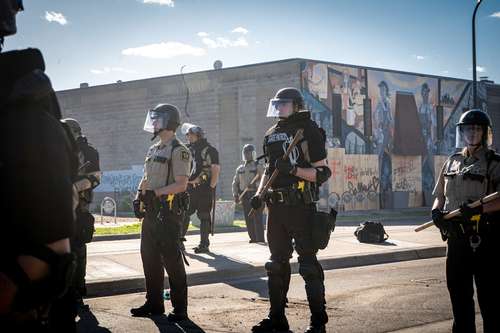
The situation deteriorated further on Wednesday when agents involved in "Operation Metro Surge"—a massive federal enforcement initiative deploying nearly 3,000 agents to the region—shot a man in the leg during an attempted arrest. The subsequent use of tear gas and flash-bang grenades against crowds gathering at the scene has drawn sharp condemnation from human rights groups and city leaders.
Governor Walz Calls for "End to Occupation"
Governor Tim Walz has forcefully rejected the President's characterization of the protests, accusing the administration of instigating violence through aggressive tactics. In a primetime address, Walz demanded the withdrawal of the surge forces, stating, "This is not law enforcement; this is a campaign of organized brutality against the people of Minnesota."
Minneapolis Mayor Jacob Frey has echoed these sentiments, labeling the federal presence "unsustainable" and filing a lawsuit alongside state Attorney General Keith Ellison to halt the federal operations. The legal challenge argues that the unchecked conduct of federal agents violates the constitutional rights of Minnesota residents.
Federal Troop Deployment: A Constitutional Crisis?
Legal experts warn that invoking the Insurrection Act could trigger a significant constitutional crisis. Unlike the National Guard, which is often deployed under state control, federal troops answer directly to the President. Critics argue that using the military to enforce immigration policy or suppress protests in a state that explicitly rejects federal assistance would set a dangerous precedent.
The standoff in Minnesota represents the most significant clash over federal power since the beginning of Trump's new term. With protestors refusing to disperse and federal agents digging in at the fortified Bishop Henry Whipple Federal Building, the prospect of active-duty soldiers patrolling American streets has moved from theoretical to imminent.
What Lies Ahead for the Twin Cities
As of Friday morning, the atmosphere in Minneapolis remains volatile. Community leaders are urging peaceful demonstrations to avoid giving the administration a pretext for military deployment, while organizing funds for legal defense. Meanwhile, DHS Secretary Kristi Noem has doubled down, asserting that federal agents will not retreat and blaming local "sanctuary" policies for the chaos.
For the residents of Minneapolis, the coming days are critical. The convergence of grief over Renee Good's death, anger at ICE enforcement controversy, and the looming threat of martial law has created a powder keg that could reshape the balance of state and federal power in the United States.